RetraBurn Official Website › Blog › Licorice In A Blend
The Licorice Compound In A Metabolism Blend
Monoammonium glycyrrhizinate does not read as licorice, and it is licorice. It is a sweetener and flavour compound derived from the root, it appears in a great many products under a chemical name, and sustained licorice intake has a well-described effect on blood pressure and potassium. The figure worth adding up is your total from every source.
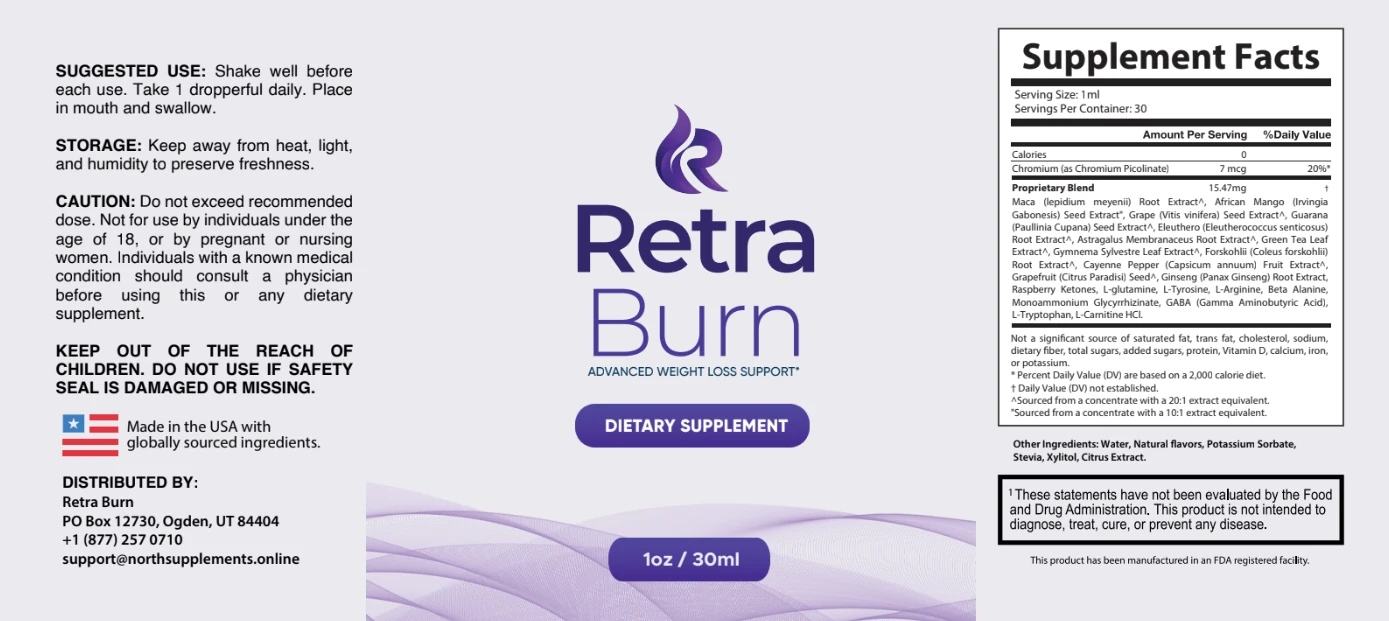
- Monoammonium glycyrrhizinate is derived from licorice root and carries the same active chemistry.
- Sustained licorice intake raises blood pressure, lowers potassium and causes fluid retention, through a mechanism that is thoroughly described.
- The effect is about cumulative intake from every source, not about any one product.
- Anyone taking a diuretic or a blood-pressure medicine, or who is pregnant, should treat licorice from any source as something to mention.
- On this label it sits inside a blend declared at 15.47 mg in total for twenty-one ingredients, which makes a large exposure from this bottle alone unlikely.
What monoammonium glycyrrhizinate is
Licorice root contains glycyrrhizin, a compound around fifty times sweeter than sugar and responsible for the characteristic taste. Monoammonium glycyrrhizinate is an ammonium salt of glycyrrhizic acid, produced from the root and used as a sweetener and flavour ingredient.
The chemical name is the reason this post exists. On a panel it reads as a technical additive, and a reader scanning for licorice will not find it. Nothing about the naming is improper: it is the correct chemical name for the substance and the labelling rule is satisfied by it. It is simply not legible as licorice to most people.
Why a metabolism formula carries it
Almost certainly for the same reason anything carries it: taste. A blend of botanical extracts and free amino acids is bitter, and a liquid taken straight from a dropper has no capsule shell between the formula and the tongue. The other-ingredients line on this label already carries stevia, xylitol and a citrus note, which is a formulation built around the same problem.
What sustained licorice intake does
The mechanism is one of the better-described ones in this whole field, and it is worth understanding rather than memorising.
Glycyrrhizin inhibits an enzyme that normally protects the mineralocorticoid receptor from cortisol. With that enzyme inhibited, cortisol acts at a receptor that would ordinarily be responding to aldosterone, and the body behaves as though aldosterone levels were high when they are not. Sodium and water are retained, potassium is lost, and blood pressure rises.
The name for that picture is pseudohyperaldosteronism, and the prefix is doing real work: the hormone is not elevated, the effect is.
What the published record shows
A 2026 narrative review of licorice-induced pseudohyperaldosteronism gathers the clinical risk factors, which is the most useful form this literature takes for a general reader. It is not a rare-case curiosity: the picture is familiar enough to have accumulated risk factors worth reviewing.
Ten years of French poison-centre reports on dietary liquorice comes at the same question from the population end, and the sources involved are ordinary foods and drinks rather than exotic preparations.
The LactMed entry on licorice covers use during breastfeeding, and the NCCIH summary of licorice root is the plainest general account of what is and is not established.
Two things are consistent across all four. The effects are about sustained intake rather than a single exposure. And the amounts involved are frequently ones people would not think of as medicinal.
| What sustained licorice intake can do | How it shows up | What the reports describe |
|---|---|---|
| Raise blood pressure | A reading that drifts upward with no other explanation | The commonest presentation in the case literature |
| Lower potassium | Muscle weakness, cramps, fatigue | Reported alongside the blood-pressure effect |
| Cause fluid retention | Swelling, particularly in the ankles | Part of the same mechanism |
| Interact with medicines | Diuretics and blood-pressure drugs in particular | Worth naming to whoever prescribes them |
These are effects of sustained intake described in case reports and reviews, not predictions about any particular product.
See the full RetraBurn blend list, in declared order
All 21 named as the label prints them, inside one declared total of 15.47 mg, with both extract footnotes and the caution reproduced. 60 days from shipment behind any order placed here.
Two bottles $158 · six bottles $294 · 60-day money-back guarantee
Order RetraBurn On The Official Website1 ml a day · 30 servings a bottle · lot RET-26/TH-2877
Everywhere else it turns up
Because the effect is about cumulative intake, the useful exercise is an inventory rather than a verdict on one product.
| Where licorice turns up | Usually labelled as | Easy to overlook? |
|---|---|---|
| Liquorice confectionery | Liquorice, liquorice extract | No, but the amount eaten is easy to underestimate |
| Herbal teas and infusions | Licorice root, Glycyrrhiza glabra | Yes. It is a common sweetening base in blends sold for other purposes |
| Traditional herbal formulas | Gan cao, yashtimadhu, licorice root | Yes, and often at meaningful amounts |
| Supplement blends | Glycyrrhizin, monoammonium glycyrrhizinate, licorice extract | Yes. The chemical names do not read as licorice at a glance |
| Some chewing tobaccos and flavoured products | Not always named | Yes |
The point of this table is addition. Any single source may be small; the total is what the literature is about.
The fourth row is the one this post is about. A supplement blend can carry licorice under a chemical name, and somebody taking two or three supplements plus a herbal tea may be accumulating from several directions without ever seeing the word.
That is not an argument against any of those products individually. It is an argument for reading the full ingredient list on each of them once, which takes a few minutes and is done.
What to watch for, and who should watch
Most people taking a small amount of licorice from one source will notice nothing at all, and the literature is not a reason for alarm. Four groups have a specific reason to pay attention.
- Anyone taking a diuretic. The potassium effect runs in the same direction as several common water tablets.
- Anyone taking a blood-pressure medicine. The mechanism works against what the medicine is for.
- Anyone with low potassium for another reason. The effects add.
- Anyone pregnant or breastfeeding. The label on this product already rules both out, and LactMed covers the second in detail.
For everybody in those groups the useful action is the same and it is not dramatic: take the bottle, or a photograph of the ingredient list, to whoever prescribes your medicines and mention licorice by name rather than by chemical name. That is a two-minute conversation and it is the whole of the recommendation.
What the declared blend total means here
The panel on this label declares 15.47 mg for a blend of 21, and the licorice compound is eighteenth in the declared order of weight.
Two things follow. The ceiling on the licorice compound in a daily serving is 15.47 mg, because no member of a blend can exceed the whole of it. And its position at eighteenth means the real figure is below the seventeen names above it, though by how much is not published.
Against the amounts described in the case literature, a ceiling of that size makes a meaningful exposure from this bottle alone unlikely. It does not make it irrelevant, because the literature is about totals, and a person already taking licorice in two other forms is adding rather than starting.
The general argument about what a declared total settles is set out in a separate post, and it applies here in the product's favour rather than against it.
Why naming it once beats hedging five times
There is a way of writing about supplement safety that consists of putting a general warning at the foot of every section. It is easy to produce, it satisfies a nervous instinct, and it tells a reader nothing.
The alternative is to name the specific thing once, explain the mechanism, say who it applies to, and stop. A reader taking a diuretic now knows something actionable. A reader taking nothing knows they can move on.
This blend has three entries with a literature worth naming, and all three are handled that way across this website. The licorice compound is here. Green tea extract and the liver, and the tryptophan impurity history, are on the side effects page, which is the page whose subject that is.
The label's own caution is the ceiling on everything else, and it is reproduced verbatim on the disclaimer page rather than paraphrased into something softer.
Four questions worth asking
- Does the ingredient list carry licorice under any name? Glycyrrhizin, glycyrrhizinate, glycyrrhizic acid, Glycyrrhiza glabra, gan cao and yashtimadhu are all the same plant.
- How many sources are you taking it from? Teas, sweets and other supplements all count, and the literature is about the total.
- Are you on a diuretic or a blood-pressure medicine? If so, mention it by name at the next appointment.
- Is there a declared amount, or a blend total at least? Without one there is no ceiling, and no way to reason about exposure at all.
That last question is the general one, and it is why a label that prints a blend total is easier to be safe with than one that prints a list of names and nothing underneath it.
References
- Yoshino T, Makino T. Clinical risk factors of licorice-induced pseudohyperaldosteronism: a 2026-updated narrative review. Front Pharmacol. 2026;17:1840515. PMID 42292819. https://pubmed.ncbi.nlm.nih.gov/42292819/
- Care W, Grenet G, Schmitt C, et al. Adverse reactions of liquorice consumed in the diet: a 10-year retrospective study of poison centres in France. Clin Toxicol (Phila). 2025;63(8):579-587. PMID 40689486. https://pubmed.ncbi.nlm.nih.gov/40689486/
- Licorice. In: Drugs and Lactation Database (LactMed). Bethesda (MD): National Institute of Child Health and Human Development; 2006-. Updated 15 June 2026. PMID 30000900. https://pubmed.ncbi.nlm.nih.gov/30000900/
- Licorice Root. National Center for Complementary and Integrative Health, National Institutes of Health. https://www.nccih.nih.gov/health/licorice-root
- Nutrition labeling of dietary supplements. 21 CFR 101.36. Electronic Code of Federal Regulations, Office of the Federal Register. https://www.ecfr.gov/current/title-21/chapter-I/subchapter-B/part-101/subpart-F/section-101.36