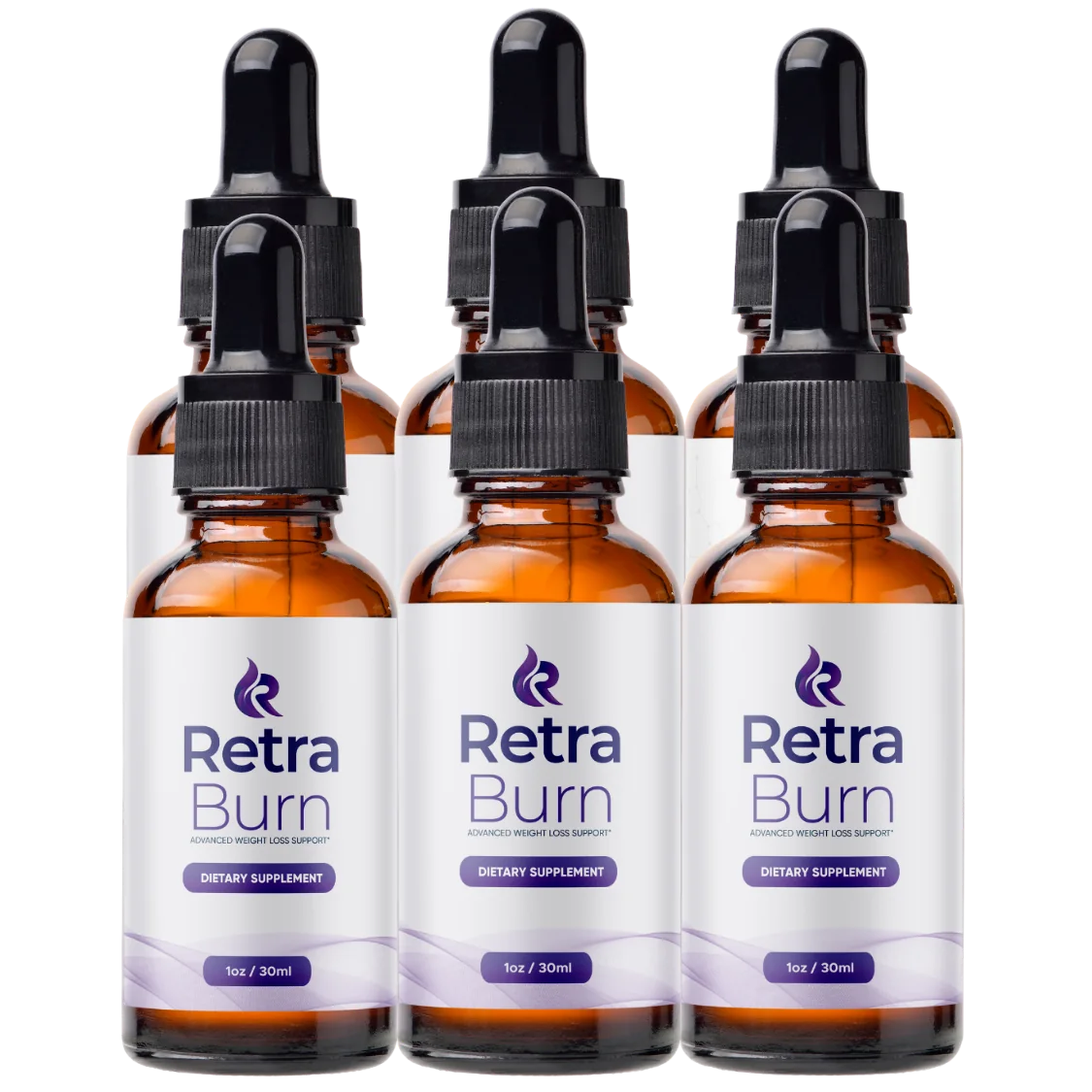
RetraBurn Official Website › How It Works
How It WorksHow Does RetraBurn Work? A Simple Guide to the Liquid
RetraBurn is a liquid, so it starts to absorb in the stomach within minutes.
One dropperful is 1 ml. The panel draws on three lines of research: glucose handling, heat production and the amino acid group.
What a water-based formula does after it is swallowed, and the three mechanisms this particular panel is built on.
What happens after a dropperful of RetraBurn
The short mechanical answer, before the three pathways.
Swallowing a liquid removes one step that a capsule cannot avoid. A gelatin or cellulose shell has to soften and split before anything inside it is available, and how long that takes depends on the shell, the fill and what else is in the stomach. A millilitre of sweetened water skips all of it.
What follows is ordinary. The liquid mixes with stomach contents, passes into the small intestine and is absorbed across the gut wall at a speed that differs for each compound in it. Chromium is a trace mineral and follows a mineral's route. The amino acids follow the routes amino acids follow. The plant concentrates are the least predictable of the three, because a concentrate is a mixture rather than a molecule.
Nothing in that sequence is designed to be felt, and nothing on this panel would announce itself if it were present in larger amounts. There is no stimulant here except the caffeine inside guarana, no vasodilator working at a noticeable scale, and nothing with an acute action a person could time with a watch. A formula that did announce itself in the first hour would be doing something this label does not claim.
Adherence. A dropper takes about four seconds and needs no water, which is the whole of its practical advantage and a real one for a product whose proposition rests on sixty consecutive days. It is not evidence about the formula, and a liquid is not inherently better absorbed than a well-made capsule. It is easier to keep doing.
The glucose pathway in RetraBurn
Chromium and gymnema, approaching the same question from opposite ends.
Two names on this panel come from the same branch of research, and it is the branch with the most human data behind it.
Chromium is a trace mineral involved in how cells respond to insulin. That is the reason it appears in a metabolism formula at all, and it is why almost every trial of it was run in people with type 2 diabetes rather than in people trying to lose weight. A meta-analysis of chromium and glycaemic control covers that literature, and a later dose-response analysis asked the narrower question of what it does to body composition in the same population.
Gymnema sylvestre comes at the same subject from the other end. Its leaf contains gymnemic acids that temporarily occupy the sweet taste receptor, which is a real and easily demonstrated effect in the mouth. The human work on swallowing it is about blood glucose rather than about taste: the randomised trial in adults with impaired glucose tolerance used 300 mg twice daily and measured fasting and post-load glucose.
Neither mechanism is speculative and neither is strong. Both were established at amounts set out in the label analysis below.
The thermogenic pathway in RetraBurn
Cayenne, green tea and guarana, and the measurement that makes this pathway look stronger than it is.
Three plants on this panel belong to the oldest idea in this category: that certain compounds raise the rate at which the body spends energy at rest.
Cayenne carries capsaicinoids, the compounds responsible for chilli heat. A meta-analysis of capsaicinoids and thermogenesis in healthy adults is the current summary, and an earlier pooled analysis of capsaicin and capsiate looked at the same question in a heavier population. The effect described in both is small and short.
Green tea contributes catechins, of which EGCG is the one named in most protocols. A meta-analysis of EGCG and energy expenditure reported effects on the respiratory quotient, which is a measure of which fuel the body is burning rather than of how much, from 300 mg of EGCG upward.
Guarana contributes caffeine, and caffeine's thermogenic effect is the best established of the three. The pooled guarana trials ran at 37.5 to 500 mg of the seed extract, carrying 4.3 to 100 mg of caffeine. The top of that range is roughly a cup of coffee, which is a helpful yardstick in both directions.
Because it is measurable. An effect on energy expenditure can be shown in a chamber over a few hours, which makes for a confident sentence on a sales page. What has been much harder to show is that a measurable change in a chamber becomes a change on a scale over months. The trials that tried are the ones cited above, and their results are why the seller's own material says support rather than anything stronger.
The amino acid group in RetraBurn
Eight entries whose research is reported in grams rather than milligrams.
Eight of the nine unmarked entries are amino acids or close relatives, and they are the part of this panel a reader is most likely to recognise from a sports nutrition tub rather than from a supplement shelf.
Carnitine is the one with the clearest rationale: it carries long-chain fatty acids across the mitochondrial membrane, which is a genuine step in burning them. A systematic review of thirty-seven randomised trials with a dose-response analysis put the maximum effect at 2,000 mg a day.
Tyrosine is a precursor rather than an actor. The body builds dopamine and thyroid hormone from it, and a cold-exposure trial that dosed by body weight is typical of its literature: 150 mg per kilogram per serving, which is around ten grams for an average adult.
Arginine, beta alanine, glutamine, tryptophan and GABA each have their own rationale and their own pooled analyses, and the common feature of all five is that their trials are measured in grams. The 2026 review of oral GABA is the one that is most openly uncertain, because an orally taken signalling molecule has to cross a barrier built to exclude it.
| Entry | The step it is proposed to act on | Where its trials are measured |
|---|---|---|
| L-Carnitine HCl | Fatty acid transport into the mitochondria | Milligrams, in thousands |
| L-Arginine | Nitric oxide production and vascular tone | Grams |
| Beta Alanine | Muscle buffering during hard effort | Grams |
| L-Glutamine | Gut lining and nitrogen balance | Tens of grams |
| L-Tyrosine | Dopamine and thyroid hormone synthesis | Grams, dosed by weight |
| L-Tryptophan | Serotonin synthesis | Grams |
| GABA | Inhibitory signalling | Hundreds of milligrams to grams |
| Monoammonium Glycyrrhizinate | Not proposed as a metabolic actor here | Named for its known action rather than for a dose |
The right-hand column is the unit the published work is reported in, not a recommendation and not a figure from this label.
What a 20:1 extract on the RetraBurn panel does and does not multiply
Ten entries carry the caret, and the mark is read wrongly more often than it is read correctly.
This is the single most misread thing on a botanical label, and it is worth setting out slowly because ten entries here carry the mark.
A 20 to 1 extract equivalent means the manufacturer started with twenty kilograms of dried plant material and finished with one kilogram of concentrate. The concentrate is stronger than the raw herb by weight, and that is a genuine and useful thing. It is how a quantity of leaf that would fill a spoon becomes something that fits in a pipette.
What the ratio does not do is change the number on the panel. The panel declares what went into the bottle, which is the concentrate. A gram of 20 to 1 green tea extract stands for twenty grams of leaf, and it still weighs a gram. Multiplying the declared weight by twenty to arrive at a dose describes the field it was grown in rather than the bottle it ended up in.
The second thing a ratio cannot do is tell you what is in the concentrate. Two 20 to 1 green tea extracts can carry very different amounts of EGCG depending on how they were made, which is why the better research standardises to a marker compound and states it. A ratio describes a process, and a marker standardisation describes a result.
Take the whole 15.47 mg blend, read it as generously as arithmetic allows, and pretend it is one ingredient. Multiply by twenty for the concentration ratio and you have 309 mg of notional raw plant material spread across 21 names. The forskohlii trial alone used 500 mg a day of extract, not of raw root. The ratio is real, and it does not close that gap.
Honest mechanism analysis: where the RetraBurn chain breaks
Three good pathways and one arithmetic problem, stated once.
Every link described above is real. A mechanism is a hypothesis about how something could work, a trial tests whether it does, and a dose decides whether the trial says anything about the bottle in your hand. This panel is strong on the first, mixed on the second and short on the third.
The break is arithmetic rather than biological. The trials that established these pathways used 500 mg of forskohlii extract, 600 mg of gymnema, 300 mg of EGCG, 2,000 mg of carnitine and four grams of arginine. All 21 blend members here share 15.47 mg. The mechanisms do not stop being true at a smaller weight; they stop being demonstrated.
The chromium row is the exception and it is worth naming as one. At 7 mcg it is a nutritional amount, honestly declared as 20% of a Daily Value, and it is exactly what it says it is. It is not the 200 to 1,000 micrograms a day the weight-management trials used, and the panel never suggested it was.
What none of this establishes is a problem with the formula. Small is small rather than dangerous, and the same arithmetic that limits an effect also limits a risk. The full comparison, ingredient by ingredient against the amount each trial used, is on the supplement facts page and in the dosage section of the home page.
How RetraBurn works: common questions
How does RetraBurn work in the body?
It does not act through one route. Chromium and gymnema come from glucose-handling research, cayenne, green tea and guarana from thermogenesis research, and the eight amino acids from a third literature again. A liquid also removes the capsule shell step, so absorption begins sooner than with a tablet.
How fast does RetraBurn start working?
Absorption starts within minutes because there is no shell to dissolve. That is not the same as an effect. Nothing on this panel acts acutely at the amounts declared, and the seller's own figure for how long buyers wait is 4–8 weeks.
Should I feel anything after taking RetraBurn?
No, and a formula in this category that produces a sensation is usually doing it with caffeine. Guarana is the only caffeine here and it sits inside the shared blend, so the amount is a fraction of a cup of coffee at most.
Does a 20:1 extract mean twenty times the dose?
No. It means twenty parts of dried plant were reduced to one part of concentrate. The panel declares the weight of the concentrate that went into the bottle. The ratio describes what happened before that point and does not multiply the declared figure.
Is a liquid absorbed better than a capsule?
It is absorbed sooner, because there is no shell to open. Better is a different claim and one nobody has tested for this formula. The honest advantage of a dropper is that people keep taking it.
Does RetraBurn work without changing anything else?
Nobody can promise that, and this desk will not. No trial has been run on the finished formula. What food, sleep and movement do to the same measurements is larger than anything this panel proposes, which is why the label describes support rather than an outcome.
Sources behind the RetraBurn mechanism pages
The pooled analyses and trials named above, in the order the pathways appear.
- Asbaghi O, Fatemeh N, Mahnaz RK, et al. Effects of chromium supplementation on glycemic control in patients with type 2 diabetes: a systematic review and meta-analysis of randomized controlled trials. Pharmacol Res. 2020;161:105098. PMID 32730903. https://pubmed.ncbi.nlm.nih.gov/32730903/
- Vajdi M, Khajeh M, Safaei E, et al. Effects of chromium supplementation on body composition in patients with type 2 diabetes: a dose-response systematic review and meta-analysis of randomized controlled trials. J Trace Elem Med Biol. 2024;81:127338. PMID 37952433. https://pubmed.ncbi.nlm.nih.gov/37952433/
- Gaytan Martinez LA, Sanchez-Ruiz LA, Zuniga LY, et al. Effect of Gymnema sylvestre administration on glycemic control, insulin secretion, and insulin sensitivity in patients with impaired glucose tolerance. J Med Food. 2021;24(1):28-32. PMID 32460589. https://pubmed.ncbi.nlm.nih.gov/32460589/
- Irandoost P, Lotfi Yagin N, Namazi N, et al. The effect of capsaicinoids or capsinoids in red pepper on thermogenesis in healthy adults: a systematic review and meta-analysis. Phytother Res. 2021;35(3):1358-1377. PMID 33063385. https://pubmed.ncbi.nlm.nih.gov/33063385/
- Zsiboras C, Matics R, Hegyi P, et al. Capsaicin and capsiate could be appropriate agents for treatment of obesity: a meta-analysis of human studies. Crit Rev Food Sci Nutr. 2018;58(9):1419-1427. PMID 28001433. https://pubmed.ncbi.nlm.nih.gov/28001433/
- Kapoor MP, Sugita M, Fukuzawa Y, et al. Physiological effects of epigallocatechin-3-gallate (EGCG) on energy expenditure for prospective fat oxidation in humans: a systematic review and meta-analysis. J Nutr Biochem. 2017;43:1-10. PMID 27883924. https://pubmed.ncbi.nlm.nih.gov/27883924/
- Hack B, Penna EM, Talik T, et al. Effect of guarana (Paullinia cupana) on cognitive performance: a systematic review and meta-analysis. Nutrients. 2023;15(2). PMID 36678305. https://pubmed.ncbi.nlm.nih.gov/36678305/
- Talenezhad N, Mohammadi M, Ramezani-Jolfaie N, et al. Effects of l-carnitine supplementation on weight loss and body composition: a systematic review and meta-analysis of 37 randomized controlled clinical trials with dose-response analysis. Clin Nutr ESPEN. 2020;37:9-23. PMID 32359762. https://pubmed.ncbi.nlm.nih.gov/32359762/
- Mahoney CR, Castellani J, Kramer FM, et al. Tyrosine supplementation mitigates working memory decrements during cold exposure. Physiol Behav. 2007;92(4):575-82. PMID 17585971. https://pubmed.ncbi.nlm.nih.gov/17585971/
- Lu WY. Supplementation of gamma-aminobutyric acid as a functional nutrient. Nutrients. 2026;18(14). PMID 42514458. https://pubmed.ncbi.nlm.nih.gov/42514458/
- Godard MP, Johnson BA, Richmond SR. Body composition and hormonal adaptations associated with forskolin consumption in overweight and obese men. Obes Res. 2005;13(8):1335-43. PMID 16129715. https://pubmed.ncbi.nlm.nih.gov/16129715/
- Maunder A, Bessell E, Lauche R, et al. Effectiveness of herbal medicines for weight loss: a systematic review and meta-analysis of randomized controlled trials. Diabetes Obes Metab. 2020;22(6):891-903. PMID 31984610. https://pubmed.ncbi.nlm.nih.gov/31984610/
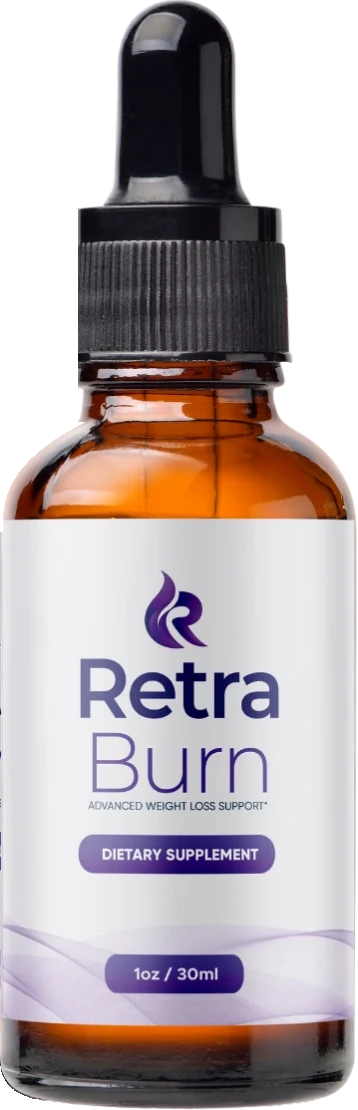
Order RetraBurn and start the sixty-day clock
One dropperful a day, 30 servings a bottle, free U.S. shipping on three and six bottles, and 60 days from shipment to decide.
Two bottles $158 · six bottles $294 · 60-day money-back guarantee
Order RetraBurn On The Official Website1 ml a day · 30 servings a bottle · lot RET-26/TH-2877