RetraBurn Official Website › Side Effects
Side EffectsRetraBurn Side Effects, Cautions and Who Should Ask First
No adverse event has been reported to us for RetraBurn, and a mild digestive complaint is the most likely one.
That comes from the sweetened liquid base rather than the panel. The label rules out anyone under 18 and anyone pregnant or nursing, and three blend entries are worth checking against other products you take.
What is likely, what is worth counting, and what the label itself says.
What most people notice when they start RetraBurn
Three things, and two of them come from the line under the panel.
Very little, and that is what the panel would predict. There is no stimulant here at a dose that announces itself, nothing with an acute action, and a millilitre of sweetened water is a small thing to ask a digestive system to deal with.
Where a first-week complaint does turn up on a product like this, it is usually one of three things, and none of them is on the Supplement Facts panel.
The taste
Stevia has a distinctive aftertaste that a proportion of people find unpleasant, and a botanical concentrate is bitter underneath it. A mouthful of water afterwards deals with both. This is the commonest reason a liquid supplement is abandoned in week one and it has nothing to do with whether it works.
A loose stool or a little wind
Xylitol is a sugar alcohol, and sugar alcohols are osmotically active in the gut. The quantity in one millilitre is very small, but people vary widely in what they tolerate, and someone who already reacts to sugar-free chewing gum is the person most likely to notice anything here.
Nothing at all
Which is the most common report and the correct expectation. A formula whose whole blend weighs fifteen milligrams is unlikely to produce a sensation, and a buyer expecting one has been set up by the category rather than by this bottle.
Three entries in RetraBurn worth counting across your whole shelf
Three compounds, and in each case the question is a total rather than this bottle.
The useful safety question for a small blend is rarely about the blend on its own. It is about totals. If the same compound appears in three products a person takes, the relevant number is the sum, and these are the three names on this panel where that arithmetic matters.
Monoammonium glycyrrhizinate, a licorice compound
The one entry here with a well-described physiological action at sustained intake. Licorice raises blood pressure and lowers potassium through a mechanism set out in a 2026 review of licorice-induced pseudohyperaldosteronism, and ten years of French poison-centre reports show what that looks like when it happens. The NCCIH page on licorice root is the plain-language version. The amount possible inside a shared 15.47 mg blend is small. The reason to name it anyway is that licorice tea, licorice confectionery and licorice supplements all add to the same total.
Green tea leaf extract
A concentrated extract is a different exposure from a cup of tea, and it has a documented liver-injury literature that tea does not. The LiverTox chapter is the standard reference, a 2024 estimate of exposure to hepatotoxic botanicals puts the scale of use in context, and NCCIH's summary states the distinction plainly. The practical advice is simple: do not take two products that both contain a concentrated green tea extract.
Caffeine, from guarana
Guarana is the only caffeine on this panel and it sits inside the shared blend, so the amount cannot be read off the label. The pooled guarana trials used amounts carrying 4.3 to 100 mg of caffeine, and the top of that range is roughly one cup of coffee. Whatever share of 15.47 mg the guarana takes, a serving here is a fraction of a cup and is not the reason anyone is awake at two in the morning.
RetraBurn and prescribed medicine
Six situations, each with the specific word that makes the question answerable.
The label asks anyone with a known medical condition to speak to a physician before using this or any dietary supplement, and that sentence is quoted in full further down. What makes such a conversation useful is naming a compound rather than a product, so this table names them.
| If you take | The relevant entry | What to say |
|---|---|---|
| Medicine for blood glucose | Chromium picolinate, 7 mcg | Name chromium picolinate. Its research base sits largely in people with type 2 diabetes, per the meta-analysis of glycaemic control. |
| Medicine for blood pressure, or a diuretic | Monoammonium glycyrrhizinate | Name the licorice compound. It acts on the same system as several of these medicines. |
| A potassium-sparing or potassium-lowering drug | Monoammonium glycyrrhizinate | Same conversation. Licorice lowers potassium at sustained intake. |
| Anything hepatotoxic, or with liver disease | Green tea leaf extract | Name the extract rather than green tea, because the two are different exposures. |
| A serotonergic medicine | L-tryptophan | Name it. It is the serotonin precursor, and the reason to mention it is the combination rather than the amount. |
| Nothing at all | None of the above | Then the useful step is to keep the bottle where you can read the label, and to read the caution once. |
Written to make a question answerable. It is not a list of reported interactions for this product, and no such report has reached this desk.
L-tryptophan carries a history worth knowing that has nothing to do with dose. The review of the impurities behind eosinophilia-myalgia syndrome covers an outbreak traced to contaminated material from a single manufacturer rather than to the amino acid itself. It is the clearest example in this whole panel of why who made an ingredient can matter more than how much of it there is.
The grapefruit correction on the RetraBurn panel
The famous interaction and the ingredient on this label are not the same thing.
Grapefruit has a reputation for interfering with medicines, and it is deserved. The compounds responsible inhibit an enzyme in the gut wall that breaks down a long list of drugs, and the warning appears on pharmacy labels for that reason.
That reputation belongs to the juice and the pulp. This panel carries grapefruit SEED, which is a different preparation from a different part of the fruit, and it sits inside a fifteen-milligram blend besides.
Grapefruit seed extract has an issue of its own instead, and it is a supply-chain one. Analytical work on commercial preparations found synthetic preservatives in the samples tested rather than the plant compounds the products were sold for. That is a finding about an industry rather than about this bottle, and it is why a supplier and a lot number are worth more in this category than a marketing sentence.
Anyone who has been told to avoid grapefruit because of a specific medicine should still mention this bottle, for the same reason any supplement is worth mentioning: the list is short and the conversation is quick.
Who the RetraBurn label rules out
Three groups and two instructions, all printed on the bottle.
“Do not exceed recommended dose. Not for use by individuals under the age of 18, or by pregnant or nursing women. Individuals with a known medical condition should consult a physician before using this or any dietary supplement.”
- Under eighteen. Stated on the bottle, with no adjusted serving anywhere for a younger person.
- Pregnant or nursing. Also stated. The LactMed entry on licorice is the most directly relevant reference, because the blend contains a licorice compound.
- A known medical condition, before speaking to a physician. The label asks for that conversation, and the table above is written to make it a short one.
Two more lines on the bottle belong here because they are safety instructions rather than claims.
“KEEP OUT OF THE REACH OF CHILDREN. DO NOT USE IF SAFETY SEAL IS DAMAGED OR MISSING.” A damaged seal is the one reason to refuse a bottle outright rather than to ask a question about it.
And the dose instruction itself: do not exceed the recommended dose. On a dropper that is easier to do accidentally than on a capsule, which is why the how to take it page spends a paragraph on drawing the same amount each time.
Honest safety analysis: what 15.47 mg does to the RetraBurn risk picture
One number governs both sides of this page, and it is the same number.
The arithmetic that limits what this formula can do also limits what it can cause, and it is worth stating in one place rather than implying it in six.
All 21 blend members share 15.47 mg. The licorice literature describes effects at sustained intakes measured in hundreds of milligrams to grams of glycyrrhizin a day. The green tea liver cases involve concentrated extracts at hundreds of milligrams of catechins. The caffeine range in the guarana trials tops out around a cup of coffee. Every one of those exposures is far above what a fraction of fifteen milligrams can deliver.
So the honest position is this. These three compounds are named on this page because a reader deserves to know they are in the bottle and because they add to whatever else is on the shelf. They are not named because a serving of this product is expected to cause anything.
The one genuine uncertainty is the split. A proprietary blend means the share taken by any single member is unknown, and a reader who wants to do their own arithmetic has only the ceiling to do it with. That is a real limitation of the label and it cuts both ways: it caps the benefit and it caps the risk by exactly the same amount.
One category-level point closes this. Products sold for weight management are the ones the FDA most often finds adulterated with undeclared pharmaceutical ingredients. An assessment of the agency's tainted-supplements database covers 2007 to 2021 and a JAMA Network Open analysis of agency warnings reports the same pattern. Nothing in that literature names this product. It is the reason a printed panel, a traceable lot and a working telephone number are worth more in this category than in most.
When to stop taking RetraBurn
One general rule and three specific signals, each tied to a compound named above.
Stop and speak to a clinician if something new starts after you begin and does not settle when you pause for a few days. That sentence covers almost every sensible case and needs no elaboration.
Three specific things are worth acting on rather than waiting out, and they map onto the three compounds named above: a new and persistent rise in blood pressure, swelling or muscle weakness that would fit low potassium, or yellowing of the skin or eyes and dark urine. None of those has been reported to this desk for this product. They are listed because they are the recognisable signals for the three literatures cited on this page, and knowing the signal is more useful than a general instruction to be careful.
Stopping costs nothing here. There is no withdrawal to manage and no taper, and the 60-day guarantee means stopping inside the window and asking for the money back is a single telephone call. The steps are on the refund policy page.
RetraBurn safety questions
Does RetraBurn have side effects?
No adverse event has been reported to this desk for this product. The likeliest complaint on a sweetened botanical liquid is digestive and comes from the xylitol on the other-ingredients line rather than from the panel. The label's caution is quoted in full on this page.
Can RetraBurn raise blood pressure?
The blend contains monoammonium glycyrrhizinate, a licorice compound, and licorice at sustained intake does raise blood pressure and lower potassium. The amount possible inside a 15.47 mg blend is small. Anyone already taking licorice in another form, or medicine for blood pressure, should count them together and raise it with whoever prescribes.
Is the green tea extract in RetraBurn bad for the liver?
Concentrated green tea extract has a liver-injury literature that brewed tea does not, documented in the LiverTox chapter cited on this page. The exposures described there are far above what a shared 15.47 mg blend can deliver. The practical rule is not to take two products that both contain a concentrated green tea extract.
Will RetraBurn keep me awake?
Very unlikely. Guarana is the only caffeine-bearing entry and it is inside the shared blend. The pooled guarana trials used amounts carrying up to about one cup of coffee's worth of caffeine, and a serving here is a fraction of that.
Does RetraBurn interact with medication?
Name three things if you ask: chromium picolinate if you take anything for blood glucose, monoammonium glycyrrhizinate if you take anything for blood pressure or a diuretic, and green tea leaf extract if there is any liver concern. A compound name makes the question answerable in a way that a brand name does not.
Is the grapefruit in RetraBurn a problem with medicines?
The famous grapefruit interaction belongs to the juice and the pulp. This panel carries grapefruit seed, which is a different preparation. It is still worth mentioning alongside anything else you take, because the list is short.
Can I take RetraBurn if I am pregnant?
No. The label rules out pregnancy and nursing directly, and the licorice compound in the blend is the best-documented reason for that kind of exclusion.
What should make me stop taking RetraBurn?
Anything new that starts after you begin and does not settle when you pause. The three specific signals tied to the compounds on this page are a persistent rise in blood pressure, swelling or muscle weakness, and yellowing of the skin or eyes with dark urine. None has been reported to this desk for this product.
Sources for the RetraBurn safety page
The licorice, green tea, caffeine and supply-chain references named above, in the order they appear.
- Yoshino T, Makino T. Clinical risk factors of licorice-induced pseudohyperaldosteronism: a 2026-updated narrative review. Front Pharmacol. 2026;17:1840515. PMID 42292819. https://pubmed.ncbi.nlm.nih.gov/42292819/
- Care W, Grenet G, Schmitt C, et al. Adverse reactions of liquorice consumed in the diet: a 10-year retrospective study of poison centres in France. Clin Toxicol (Phila). 2025;63(8):579-587. PMID 40689486. https://pubmed.ncbi.nlm.nih.gov/40689486/
- Licorice. In: Drugs and Lactation Database (LactMed). Bethesda (MD): National Institute of Child Health and Human Development; 2006-. Updated 15 June 2026. PMID 30000900. https://pubmed.ncbi.nlm.nih.gov/30000900/
- Licorice Root. National Center for Complementary and Integrative Health, National Institutes of Health. https://www.nccih.nih.gov/health/licorice-root
- Green Tea. In: LiverTox: Clinical and Research Information on Drug-Induced Liver Injury. Bethesda (MD): National Institute of Diabetes and Digestive and Kidney Diseases; 2012-. Updated 20 November 2020. PMID 31643260. https://pubmed.ncbi.nlm.nih.gov/31643260/
- Likhitsup A, Chen VL, Fontana RJ. Estimated exposure to 6 potentially hepatotoxic botanicals in US adults. JAMA Netw Open. 2024;7(8):e2425822. PMID 39102266. https://pubmed.ncbi.nlm.nih.gov/39102266/
- Green Tea. National Center for Complementary and Integrative Health, National Institutes of Health. https://www.nccih.nih.gov/health/green-tea
- Hack B, Penna EM, Talik T, et al. Effect of guarana (Paullinia cupana) on cognitive performance: a systematic review and meta-analysis. Nutrients. 2023;15(2). PMID 36678305. https://pubmed.ncbi.nlm.nih.gov/36678305/
- Asbaghi O, Fatemeh N, Mahnaz RK, et al. Effects of chromium supplementation on glycemic control in patients with type 2 diabetes: a systematic review and meta-analysis of randomized controlled trials. Pharmacol Res. 2020;161:105098. PMID 32730903. https://pubmed.ncbi.nlm.nih.gov/32730903/
- Ganzera M, Aberham A, Stuppner H. Development and validation of an HPLC/UV/MS method for simultaneous determination of 18 preservatives in grapefruit seed extract. J Agric Food Chem. 2006;54(11):3768-72. PMID 16719494. https://pubmed.ncbi.nlm.nih.gov/16719494/
- Ko SM, Park JE, Heo IK, et al. Safety concerns regarding impurities in L-tryptophan associated with eosinophilia myalgia syndrome. Food Chem Toxicol. 2023;179:113946. PMID 37453474. https://pubmed.ncbi.nlm.nih.gov/37453474/
- White CM. Continued risk of dietary supplements adulterated with approved and unapproved drugs: assessment of the US Food and Drug Administration's tainted supplements database 2007 through 2021. J Clin Pharmacol. 2022;62(8):928-934. PMID 35285963. https://pubmed.ncbi.nlm.nih.gov/35285963/
- Tucker J, Fischer T, Upjohn L, et al. Unapproved pharmaceutical ingredients included in dietary supplements associated with US Food and Drug Administration warnings. JAMA Netw Open. 2018;1(6):e183337. PMID 30646238. https://pubmed.ncbi.nlm.nih.gov/30646238/
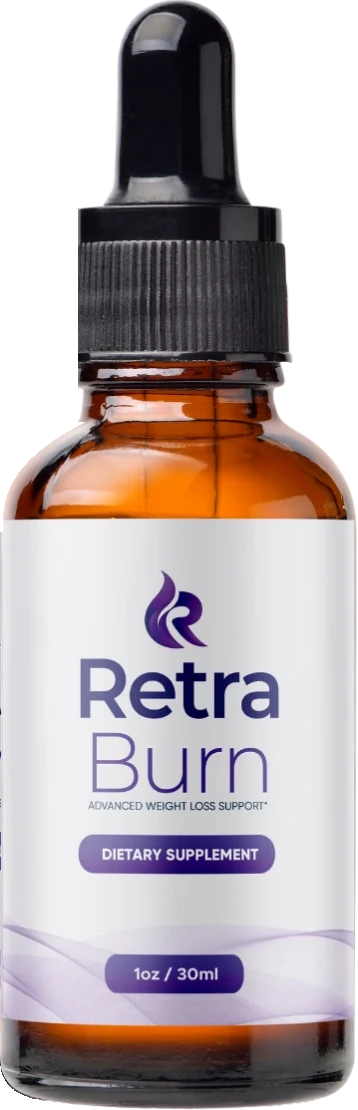
Order RetraBurn with the caution read first
Adults over eighteen, one dropperful a day, and 60 days from shipment to stop and ask for the money back if it does not suit you.
Two bottles $158 · six bottles $294 · 60-day money-back guarantee
Order RetraBurn On The Official Website1 ml a day · 30 servings a bottle · lot RET-26/TH-2877