RetraBurn Official Website › Metabolism Supplement Guide
Metabolism Supplement GuideMetabolism Supplement Guide: What The Evidence Shows
Most of this shelf runs on a small number of ingredients that have all been studied properly, and the pooled results are smaller than the packaging suggests. Chromium picolinate has a Cochrane review. Green tea catechins, capsaicinoids and L-carnitine have meta-analyses. Raspberry ketones have no human single-ingredient trial. Here is the record, with the amount each trial used.
Nothing below is about one brand. It is the research that every label in this category is borrowing from, set out with the numbers attached.
Why the amount matters more than the ingredient list
Every result below belongs to a dose. Detach it from the dose and it stops being evidence.
A metabolism formula is usually sold on its list. Fourteen botanicals, five amino acids, a mineral: the list is the product, and the amounts are printed small or not at all.
That is the wrong way round. Every result in the literature below was produced at a particular dose over a particular period, and outside that dose the finding is a piece of chemistry rather than a prediction. A trial that gave 500 mg of a standardised extract twice a day for twelve weeks tells you what 1,000 mg a day of that extract did. It does not tell you what five milligrams of it does, and nobody has tested that.
So the useful reading method is arithmetic rather than botany. Find the amount on the label, find the amount in the study, and put them side by side. Where the label declines to print an amount, the comparison cannot be made at all, and that is itself the finding.
Two further things shrink the gap between a study and a bottle, and both are easy to miss. Extract ratios: a 20:1 concentrate is twenty parts of plant reduced to one part of extract, which describes a concentration rather than a dose, and a milligram of a 20:1 extract is still a milligram. And study populations: most of these trials ran in people with a specific condition, which is not the same group as a general buyer.
Chromium picolinate, the most studied ingredient on this shelf
One Cochrane review, four dose levels, 1.1 kilograms, and the reviewers' own verdict on it.
Chromium is an essential trace mineral with a Daily Value of 35 micrograms, and chromium picolinate is the form almost every supplement uses because it absorbs better than chromium chloride.
It is also the one ingredient in this category with a Cochrane review of its own. That review pooled trials of chromium picolinate in overweight or obese adults at 200, 400, 500 and 1,000 micrograms a day over twelve to sixteen weeks. It found a difference of about 1.1 kilograms against placebo, described the evidence as low quality, and called the effect of debatable clinical relevance.
That sentence is worth holding onto, because it is the high-water mark for this whole shelf. The most studied ingredient, at doses several times the Daily Value, over three to four months, produced a little over a kilogram and the reviewers were not impressed by it.
The glycaemic literature is separate and slightly friendlier. A dose-response review in type 2 diabetes looked at body composition specifically, and a further meta-analysis covers glycaemic control. Neither turns chromium into a weight treatment, and neither was run at anything close to a nutrient-level dose.
A chromium row at 20 or 50 per cent of the Daily Value is a nutrient declaration and a perfectly reasonable thing for a formula to carry. A chromium row presented as the engine of a weight formula is borrowing a result that was produced at twenty to thirty times that amount.
Green tea catechins and EGCG
An effect floor around 300 milligrams of EGCG, and a safety literature at the other end.
Green tea extract is the most common botanical on this shelf and it has the most coherent mechanism behind it. Catechins, epigallocatechin gallate in particular, appear to shift fuel use slightly and to raise energy expenditure slightly.
A meta-analysis of EGCG and energy expenditure reports effects on the respiratory quotient from around 300 milligrams of EGCG upward. That figure is the one to carry, because it is a floor: below it the published effects are not reliably observed.
A separate review asked whether catechins improve on exercise alone in overweight and obese adults, which is the honest form of the question. Adding a supplement to a behaviour that already works is a smaller and more useful claim than adding it to nothing.
The safety literature is the part most labels leave out and it is real. The LiverTox chapter on green tea catalogues liver injury associated with concentrated extracts, and a 2024 estimate of US exposure to hepatotoxic botanicals puts numbers on how many adults are taking them. The cases involve concentrated preparations at substantial doses rather than a cup of tea, and the NCCIH summary is the plain-English version.
So a green tea row is one of the few on this shelf where the amount matters in both directions. Too little to do what the trials did is the common case; enough to matter is also enough to be worth knowing about.
Capsaicin, guarana and the thermogenic group
The one group with a genuinely positive review, and the one that is mostly caffeine.
Thermogenics are sold on the idea that a compound raises heat production and therefore energy use. Two of them have decent pooled evidence and one has a great deal of caffeine in it.
A meta-analysis of capsaicinoids and thermogenesis in healthy adults found a measurable effect on heat production, and a second meta-analysis of human studies concluded that capsaicin and capsiate could be appropriate agents in treating obesity. That is the most positive framing any ingredient on this shelf has received from a review team, and it is still a modest effect measured in fractions of a kilogram.
Guarana's own meta-analysis is about cognition rather than weight, and it usefully states the range its trials used: 37.5 to 500 milligrams of guarana, carrying 4.3 to 100 milligrams of caffeine. Guarana in a formula is, to a first approximation, a caffeine delivery mechanism with a botanical name, and a cycling time-trial randomised trial is the kind of study that produces most of its positive results.
The practical point about this group is that caffeine works, is cheap, and is available without a botanical wrapper. A formula whose thermogenic effect is caffeine is not doing anything wrong, but a buyer already drinking four coffees is stacking rather than adding.
L-carnitine, and what a dose-response analysis is for
Thirty-seven trials, one dose-response curve, and the number where it flattens.
L-carnitine moves fatty acids into mitochondria, which is a real and central piece of metabolism, and the leap from that to a fat-loss supplement is the oldest move in this category.
A dose-response meta-analysis of thirty-seven randomised trials is the best thing anyone has to work with here, and it does something most reviews do not: it locates where the effect stops growing. Two thousand milligrams a day is where the maximum effect sat. Above it the curve flattened.
An umbrella meta-analysis of carnitine and obesity indices pools the pooled results and reaches the same size of conclusion: small, real in some populations, and nothing like the framing on a bottle.
A dose-response analysis is the single most useful kind of paper for reading a supplement label, because it converts a yes-or-no question into a number. Anyone holding a carnitine row can now ask a specific question: how far below two grams a day is this, and does the label even say?
Forskolin, African mango, gymnema and the botanical middle
Five plants, the doses their trials used, and one review team declining to recommend what another pooled.
Below the four ingredients above sits a large group with one or two trials each, usually small, usually short, and frequently funded by somebody selling the extract.
The forskolin trial most often cited gave overweight men 250 milligrams of a 10 per cent forskolin extract twice a day for twelve weeks, so 500 milligrams of extract daily. It reported changes in body composition and hormones in a small sample. A 2026 twelve-week placebo-controlled study of a branded Coleus forskohlii preparation is the newer entry.
African mango is the clearest example of how this group behaves over time. A 2020 meta-analysis looked at anthropometric and cardiovascular outcomes, while an earlier systematic review reviewed the same question and declined to recommend it, on the grounds that the trials were too few and too weak to support the claims being made. Two review teams, one plant, and an honest disagreement about whether the evidence is there yet.
Gymnema sylvestre's randomised trial in impaired glucose tolerance used 300 milligrams twice daily, so 600 milligrams a day, and measured glycaemic control rather than weight. Gymnema's better-known trick happens on the tongue, where it temporarily blanks the sweet receptor, and that effect requires the material to touch the tongue rather than be swallowed.
A meta-analysis of herbal medicines for weight loss is the umbrella view of this whole group. Its conclusion, in short, is that the effects are small, the evidence is mostly low quality, and the field has a publication problem.
Raspberry ketones, and what an absent literature looks like
One famous ingredient with no human trial, and four more whose trials are about something else.
Raspberry ketone is on a great many labels in this category and has no human single-ingredient trial behind it.
That is not a rhetorical flourish. A search of the published record returns no randomised controlled trial of raspberry ketone alone in people. The two records worth citing are a mouse study in which it failed to reduce adiposity beyond the effect of eating less, and a trial of a multi-ingredient supplement that contained it alongside a great many other things, in which no ingredient's contribution can be isolated.
This is the most useful entry in the whole guide, because it shows what a missing literature looks like from the outside. The ingredient is famous, the mechanism is quotable, the packaging is confident, and there is nothing underneath it.
The same shape appears elsewhere on this shelf in weaker forms. Maca has real systematic reviews, all of them about menopausal symptoms, sexual function or semen quality, and none about metabolism. Ginseng has a dose-response review of blood lipids and a cardiovascular one. Eleuthero's human trials are about oedema and hangover. Astragalus has a 2026 trial in resistance-trained adults that found inflammatory markers moved and muscle function did not. All real research, none of it about the thing the label is being sold for.
Proprietary blends, and what a declared total settles
What the labelling rule requires, what it leaves out, and the one thing a total still settles.
The federal labelling rule for a Supplement Facts panel, 21 CFR 101.36, permits a group of ingredients to be declared as a proprietary blend. The rule requires the total weight of the blend and the members listed in descending order of weight. It does not require the split.
That is the single most important thing to understand about reading this shelf. A blend list of twenty names with one weight underneath it is fully compliant, and it is not enough information to compare anything against a trial.
What a declared total does give you is a ceiling, and a ceiling is worth more than nothing. If a blend weighs fifteen milligrams, no member of it weighs more than fifteen milligrams, so every trial dose in this guide can be set against that figure without knowing the split. Where a label prints no total at all, even that comparison is unavailable.
The descending-order requirement is the second piece of usable information, and it is routinely overlooked. The first name on a blend list is the largest component and the last is the smallest. A formula that leads its blend with an ingredient nobody has heard of, and ends it with the one on the front of the bottle, has told you something without meaning to.
The practical scale problem is worth stating once. Most of the doses in this guide are in the hundreds of milligrams or in grams. Most proprietary blends on this shelf are declared in tens of milligrams. Those two facts sit a long way apart and no amount of botanical enthusiasm closes the distance.
Why 'support' is the strongest word on any of these labels
Why every label sounds the same, and what the wording is marking the edge of.
A dietary supplement in the United States may make a structure or function claim. It may not claim to treat, cure, prevent or diagnose a disease, because that is a drug claim and a drug requires approval before sale.
That is why every honest label on this shelf is written in the same slightly awkward register. Supports. Helps maintain. Promotes. Those verbs are chosen by lawyers and they mark the boundary of what a product is allowed to say about itself.
The FDA's own questions and answers on dietary supplements sets out the framework, and the important part for a buyer is that no supplement is reviewed for effectiveness before it is sold. A registered facility is a filing about a building. It is not an assessment of a formula.
The category also has a documented adulteration problem, and products sold for weight are the worst of it. An assessment of the FDA's tainted supplements database covers fifteen years, and a JAMA Network Open analysis of agency warnings catalogues the unapproved pharmaceutical ingredients found in products on sale. The practical defence is unglamorous: buy from a seller with a traceable batch and a telephone number, and be suspicious of anything that works dramatically.
For a general reader, NCCIH's page on weight control and supplements and its guidance on using supplements wisely are the two best ten-minute reads in existence on this subject, and MedlinePlus on dietary supplements is the plainest summary of the regulatory position.
Every source behind this guide
Thirty-seven public references. Each was retrieved while this page was written and the dose a trial used was read off its abstract.
- Tian H, Guo X, Wang X, et al. Chromium picolinate supplementation for overweight or obese adults. Cochrane Database Syst Rev. 2013;2013(11):CD010063. PMID 24293292. https://pubmed.ncbi.nlm.nih.gov/24293292/
- Vajdi M, Khajeh M, Safaei E, et al. Effects of chromium supplementation on body composition in patients with type 2 diabetes: a dose-response systematic review and meta-analysis of randomized controlled trials. J Trace Elem Med Biol. 2024;81:127338. PMID 37952433. https://pubmed.ncbi.nlm.nih.gov/37952433/
- Asbaghi O, Fatemeh N, Mahnaz RK, et al. Effects of chromium supplementation on glycemic control in patients with type 2 diabetes: a systematic review and meta-analysis of randomized controlled trials. Pharmacol Res. 2020;161:105098. PMID 32730903. https://pubmed.ncbi.nlm.nih.gov/32730903/
- Kapoor MP, Sugita M, Fukuzawa Y, et al. Physiological effects of epigallocatechin-3-gallate (EGCG) on energy expenditure for prospective fat oxidation in humans: a systematic review and meta-analysis. J Nutr Biochem. 2017;43:1-10. PMID 27883924. https://pubmed.ncbi.nlm.nih.gov/27883924/
- Gholami F, Antonio J, Iranpour M, et al. Does green tea catechin enhance weight-loss effect of exercise training in overweight and obese individuals? A systematic review and meta-analysis of randomized trials. J Int Soc Sports Nutr. 2024;21(1):2411029. PMID 39350601. https://pubmed.ncbi.nlm.nih.gov/39350601/
- Green Tea. In: LiverTox: Clinical and Research Information on Drug-Induced Liver Injury. Bethesda (MD): National Institute of Diabetes and Digestive and Kidney Diseases; 2012-. Updated 20 November 2020. PMID 31643260. https://pubmed.ncbi.nlm.nih.gov/31643260/
- Likhitsup A, Chen VL, Fontana RJ. Estimated exposure to 6 potentially hepatotoxic botanicals in US adults. JAMA Netw Open. 2024;7(8):e2425822. PMID 39102266. https://pubmed.ncbi.nlm.nih.gov/39102266/
- Green Tea. National Center for Complementary and Integrative Health, National Institutes of Health. https://www.nccih.nih.gov/health/green-tea
- Irandoost P, Lotfi Yagin N, Namazi N, et al. The effect of capsaicinoids or capsinoids in red pepper on thermogenesis in healthy adults: a systematic review and meta-analysis. Phytother Res. 2021;35(3):1358-1377. PMID 33063385. https://pubmed.ncbi.nlm.nih.gov/33063385/
- Zsiboras C, Matics R, Hegyi P, et al. Capsaicin and capsiate could be appropriate agents for treatment of obesity: a meta-analysis of human studies. Crit Rev Food Sci Nutr. 2018;58(9):1419-1427. PMID 28001433. https://pubmed.ncbi.nlm.nih.gov/28001433/
- Hack B, Penna EM, Talik T, et al. Effect of guarana (Paullinia cupana) on cognitive performance: a systematic review and meta-analysis. Nutrients. 2023;15(2). PMID 36678305. https://pubmed.ncbi.nlm.nih.gov/36678305/
- Penna EM, Harp A, Hack B, et al. Guarana (Paullinia cupana) but not low-dose caffeine improves cycling time-trial performance versus placebo. Int J Sport Nutr Exerc Metab. 2024;34(1):30-37. PMID 37898479. https://pubmed.ncbi.nlm.nih.gov/37898479/
- Talenezhad N, Mohammadi M, Ramezani-Jolfaie N, et al. Effects of l-carnitine supplementation on weight loss and body composition: a systematic review and meta-analysis of 37 randomized controlled clinical trials with dose-response analysis. Clin Nutr ESPEN. 2020;37:9-23. PMID 32359762. https://pubmed.ncbi.nlm.nih.gov/32359762/
- Hamedi-Kalajahi F, Zarezadeh M, Malekahmadi M, et al. The effect of the l-carnitine supplementation on obesity indices: an umbrella meta-analysis. Int J Vitam Nutr Res. 2025;95(2):40033. PMID 40298161. https://pubmed.ncbi.nlm.nih.gov/40298161/
- Godard MP, Johnson BA, Richmond SR. Body composition and hormonal adaptations associated with forskolin consumption in overweight and obese men. Obes Res. 2005;13(8):1335-43. PMID 16129715. https://pubmed.ncbi.nlm.nih.gov/16129715/
- Channangihalli Thimmegowda S, Hussain Mirza FH, Venkataraman R, et al. A 12-week, double-blind, quasi-randomized, placebo-controlled study to evaluate the efficacy and safety of Coleus forskohlii (Forcslim) on body weight loss. J Int Soc Sports Nutr. 2026;23(1):2725137. PMID 42678522. https://pubmed.ncbi.nlm.nih.gov/42678522/
- Lee J, Chung M, Fu Z, et al. The effects of Irvingia gabonensis seed extract supplementation on anthropometric and cardiovascular outcomes: a systematic review and meta-analysis. J Am Coll Nutr. 2020;39(5):388-396. PMID 31855111. https://pubmed.ncbi.nlm.nih.gov/31855111/
- Onakpoya I, Davies L, Posadzki P, et al. The efficacy of Irvingia gabonensis supplementation in the management of overweight and obesity: a systematic review of randomized controlled trials. J Diet Suppl. 2013;10(1):29-38. PMID 23419021. https://pubmed.ncbi.nlm.nih.gov/23419021/
- Gaytan Martinez LA, Sanchez-Ruiz LA, Zuniga LY, et al. Effect of Gymnema sylvestre administration on glycemic control, insulin secretion, and insulin sensitivity in patients with impaired glucose tolerance. J Med Food. 2021;24(1):28-32. PMID 32460589. https://pubmed.ncbi.nlm.nih.gov/32460589/
- Maunder A, Bessell E, Lauche R, et al. Effectiveness of herbal medicines for weight loss: a systematic review and meta-analysis of randomized controlled trials. Diabetes Obes Metab. 2020;22(6):891-903. PMID 31984610. https://pubmed.ncbi.nlm.nih.gov/31984610/
- Cotten BM, Diamond SA, Banh T, et al. Raspberry ketone fails to reduce adiposity beyond decreasing food intake in C57BL/6 mice fed a high-fat diet. Food Funct. 2017;8(4):1512-1518. PMID 28378858. https://pubmed.ncbi.nlm.nih.gov/28378858/
- Arent SM, Walker AJ, Pellegrino JK, et al. The combined effects of exercise, diet, and a multi-ingredient dietary supplement on body composition and adipokine changes in overweight adults. J Am Coll Nutr. 2018;37(2):111-120. PMID 29111889. https://pubmed.ncbi.nlm.nih.gov/29111889/
- Lee MS, Shin BC, Yang EJ, et al. Maca (Lepidium meyenii) for treatment of menopausal symptoms: a systematic review. Maturitas. 2011;70(3):227-33. PMID 21840656. https://pubmed.ncbi.nlm.nih.gov/21840656/
- Shin BC, Lee MS, Yang EJ, et al. Maca (L. meyenii) for improving sexual function: a systematic review. BMC Complement Altern Med. 2010;10:44. PMID 20691074. https://pubmed.ncbi.nlm.nih.gov/20691074/
- Lee HW, Lee MS, Qu F, et al. Maca (Lepidium meyenii Walp.) on semen quality parameters: a systematic review and meta-analysis. Front Pharmacol. 2022;13:934740. PMID 36110519. https://pubmed.ncbi.nlm.nih.gov/36110519/
- Arabi SM, Shahraki-Jazinaki M, Abadi MN, et al. The effect of ginseng supplementation on lipid profile: GRADE-assessed systematic review and dose-response meta-analysis of randomized controlled trials. Curr Pharm Des. 2024;30(26):2047-2058. PMID 38877862. https://pubmed.ncbi.nlm.nih.gov/38877862/
- Zhang XF, Min RX, Wang Z, et al. Effects of ginseng consumption on cardiovascular health biomarkers in adults: a systematic review and meta-analysis of randomized controlled trials. Phytother Res. 2024;38(12):5873-5900. PMID 39387709. https://pubmed.ncbi.nlm.nih.gov/39387709/
- Fukada K, Kajiya-Sawane M, Matsumoto Y, et al. Antiedema effects of Siberian ginseng in humans and its molecular mechanism of lymphatic vascular function in vitro. Nutr Res. 2016;36(7):689-95. PMID 27333960. https://pubmed.ncbi.nlm.nih.gov/27333960/
- Bang JS, Chung YH, Chung SJ, et al. Clinical effect of a polysaccharide-rich extract of Acanthopanax senticosus on alcohol hangover. Pharmazie. 2015;70(4):269-73. PMID 26012258. https://pubmed.ncbi.nlm.nih.gov/26012258/
- Villanova S, Gatti M, Colosio M, et al. Astragalus membranaceus modulates inflammatory markers without enhancing muscle function following intensified resistance training. Nutrients. 2026;18(10). PMID 42197058. https://pubmed.ncbi.nlm.nih.gov/42197058/
- Nutrition labeling of dietary supplements. 21 CFR 101.36. Electronic Code of Federal Regulations, Office of the Federal Register. https://www.ecfr.gov/current/title-21/chapter-I/subchapter-B/part-101/subpart-F/section-101.36
- Questions and Answers on Dietary Supplements. U.S. Food and Drug Administration. https://www.fda.gov/food/information-consumers-using-dietary-supplements/questions-and-answers-dietary-supplements
- White CM. Continued risk of dietary supplements adulterated with approved and unapproved drugs: assessment of the US Food and Drug Administration's tainted supplements database 2007 through 2021. J Clin Pharmacol. 2022;62(8):928-934. PMID 35285963. https://pubmed.ncbi.nlm.nih.gov/35285963/
- Tucker J, Fischer T, Upjohn L, et al. Unapproved pharmaceutical ingredients included in dietary supplements associated with US Food and Drug Administration warnings. JAMA Netw Open. 2018;1(6):e183337. PMID 30646238. https://pubmed.ncbi.nlm.nih.gov/30646238/
- Weight Control. National Center for Complementary and Integrative Health, National Institutes of Health. https://www.nccih.nih.gov/health/weight-control
- Using Dietary Supplements Wisely. National Center for Complementary and Integrative Health, National Institutes of Health. https://www.nccih.nih.gov/health/using-dietary-supplements-wisely
- Dietary Supplements. MedlinePlus, National Library of Medicine. https://medlineplus.gov/dietarysupplements.html
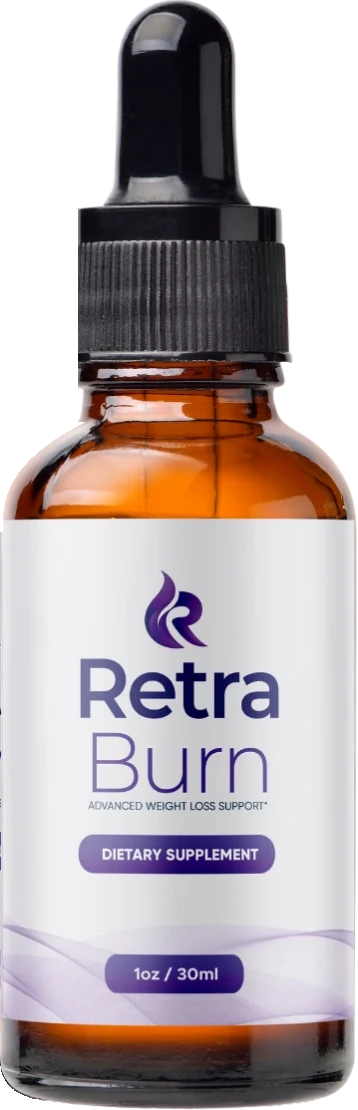
Now read the RetraBurn panel against the guide above
Chromium at 7 mcg with an arithmetic that checks, and one declared blend of 15.47 mg covering 21 of the names in this guide. The comparison is on this website in full.
Two bottles $158 · six bottles $294 · 60-day money-back guarantee
Order RetraBurn On The Official Website1 ml a day · 30 servings a bottle · lot RET-26/TH-2877